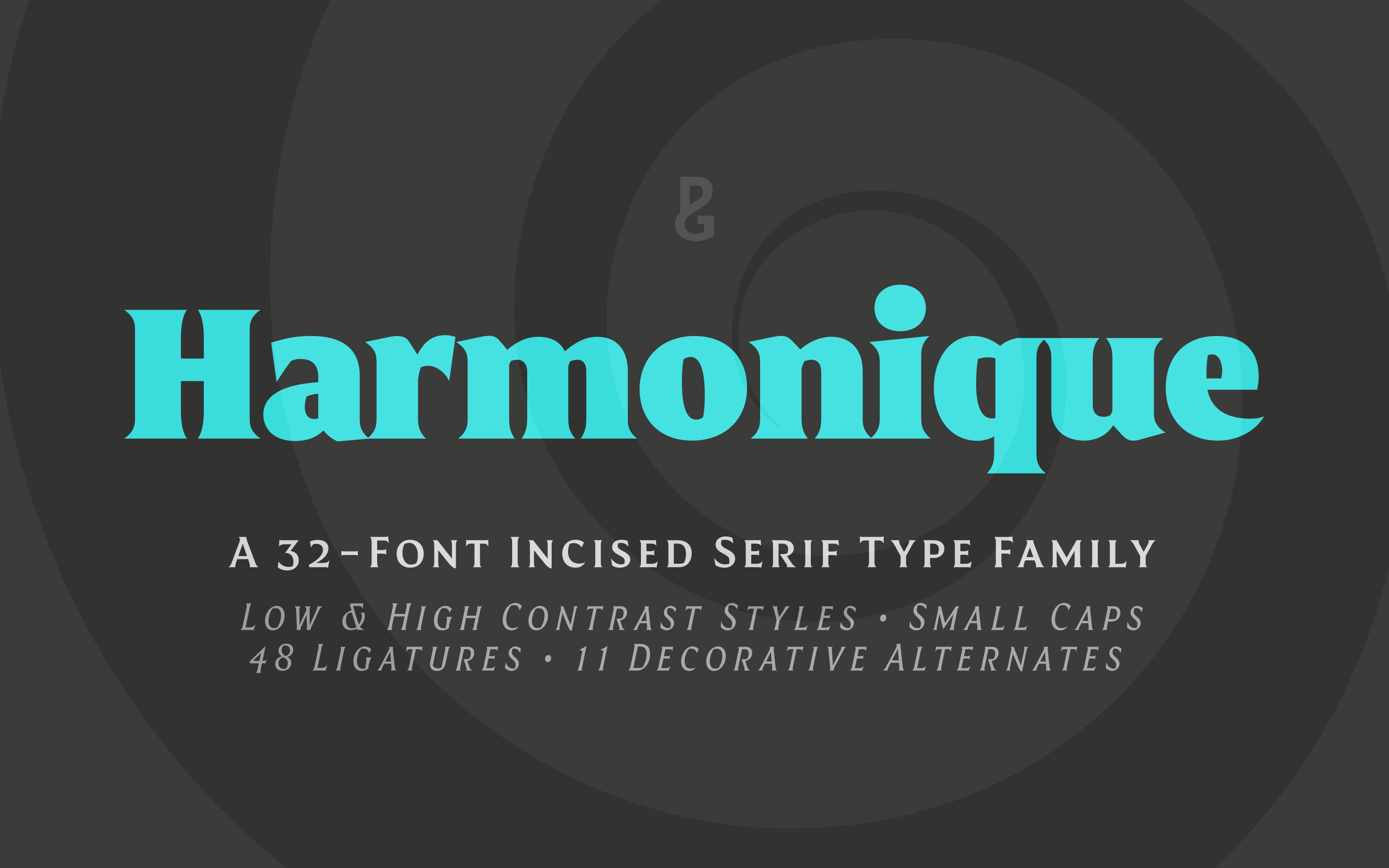
An Incised Serif Type Family

This typeface is part of The Monotype Library.
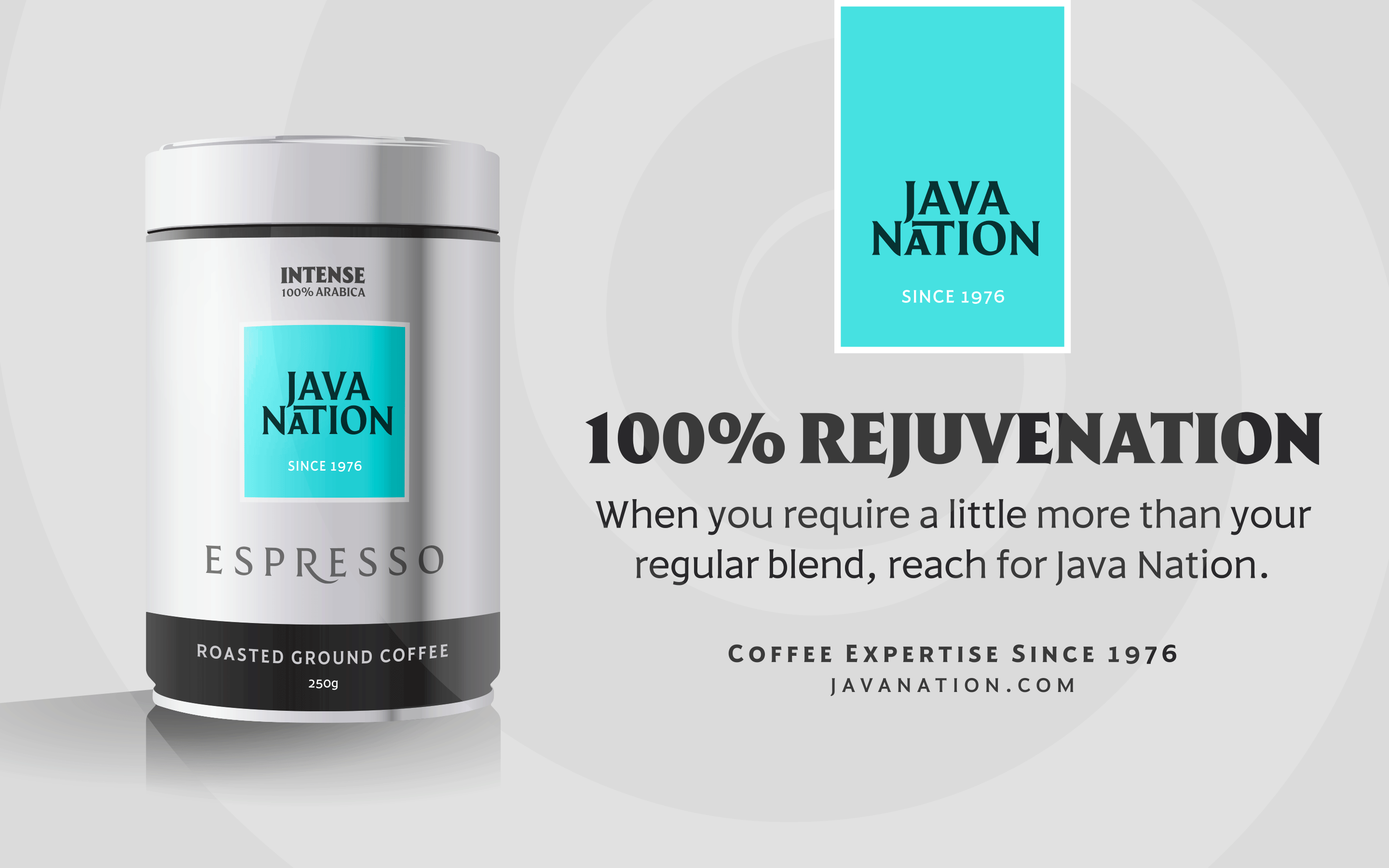
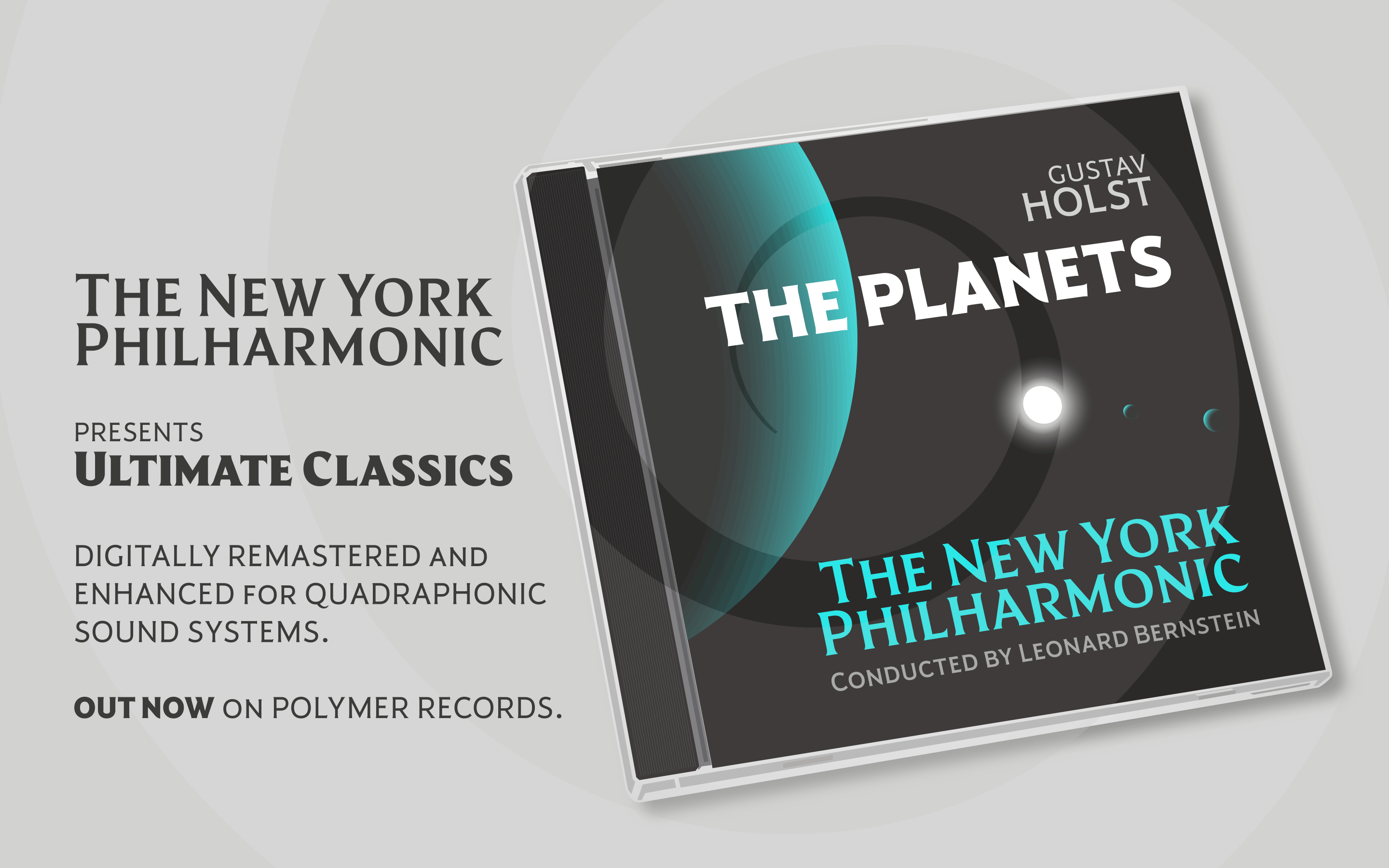
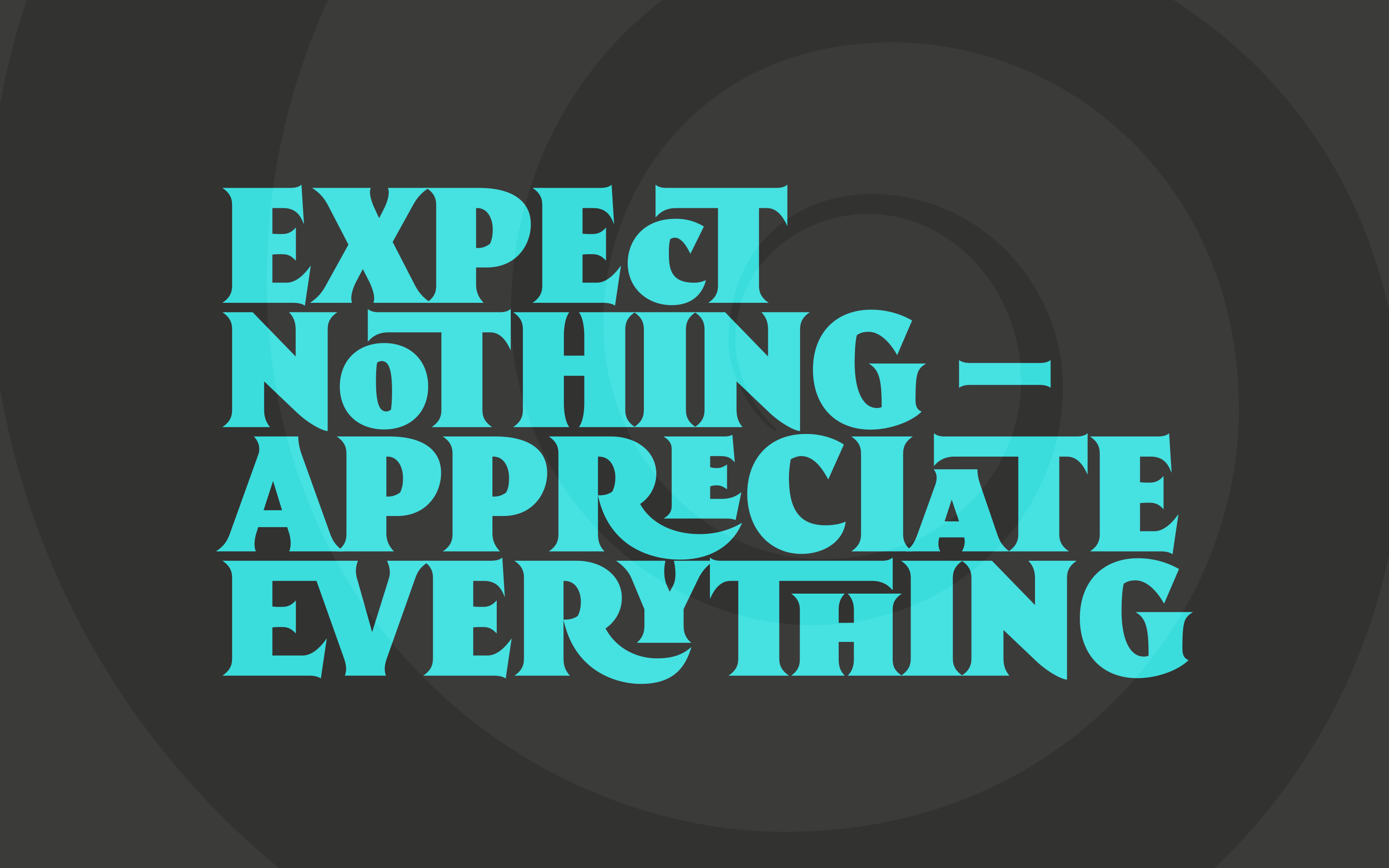
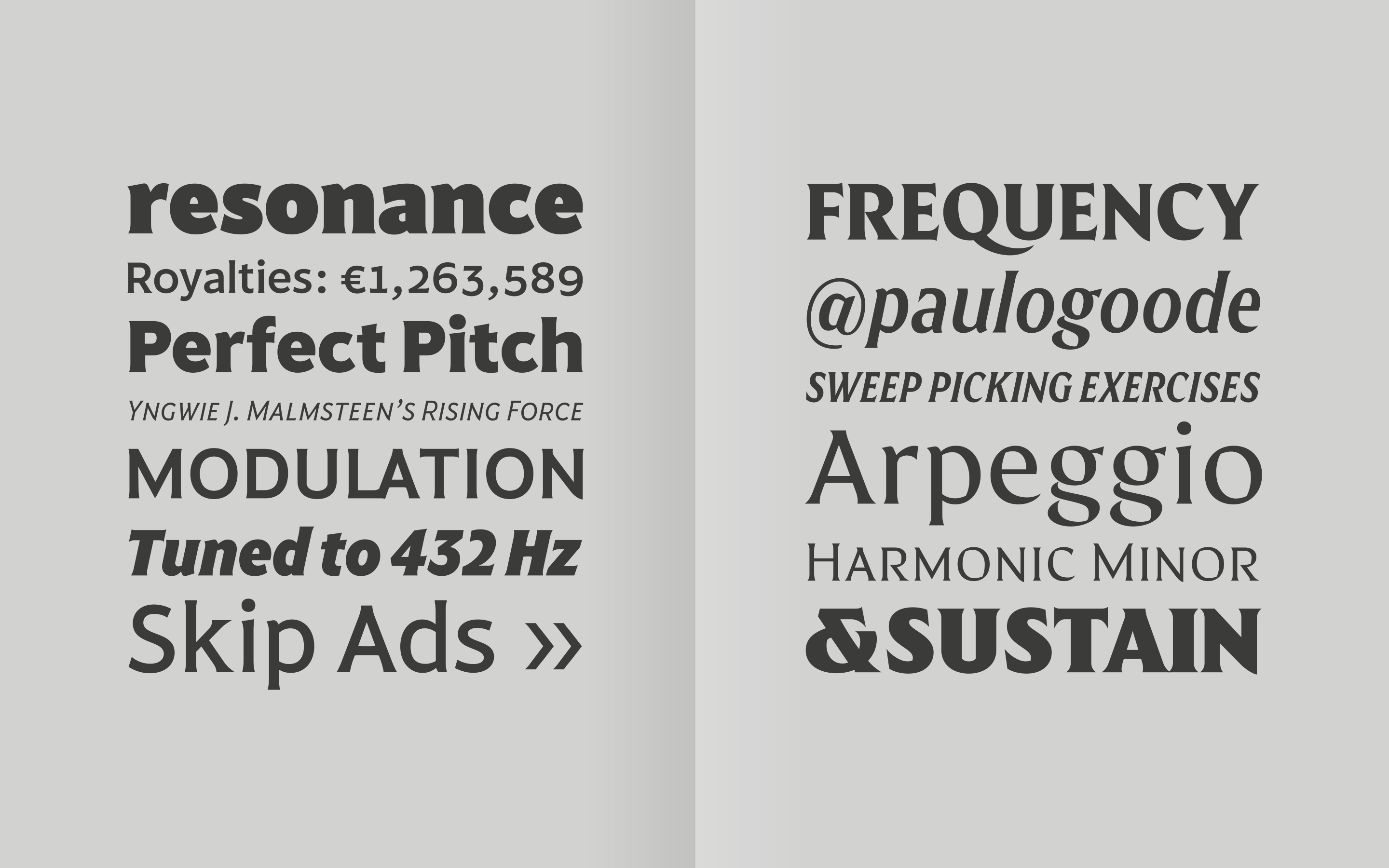
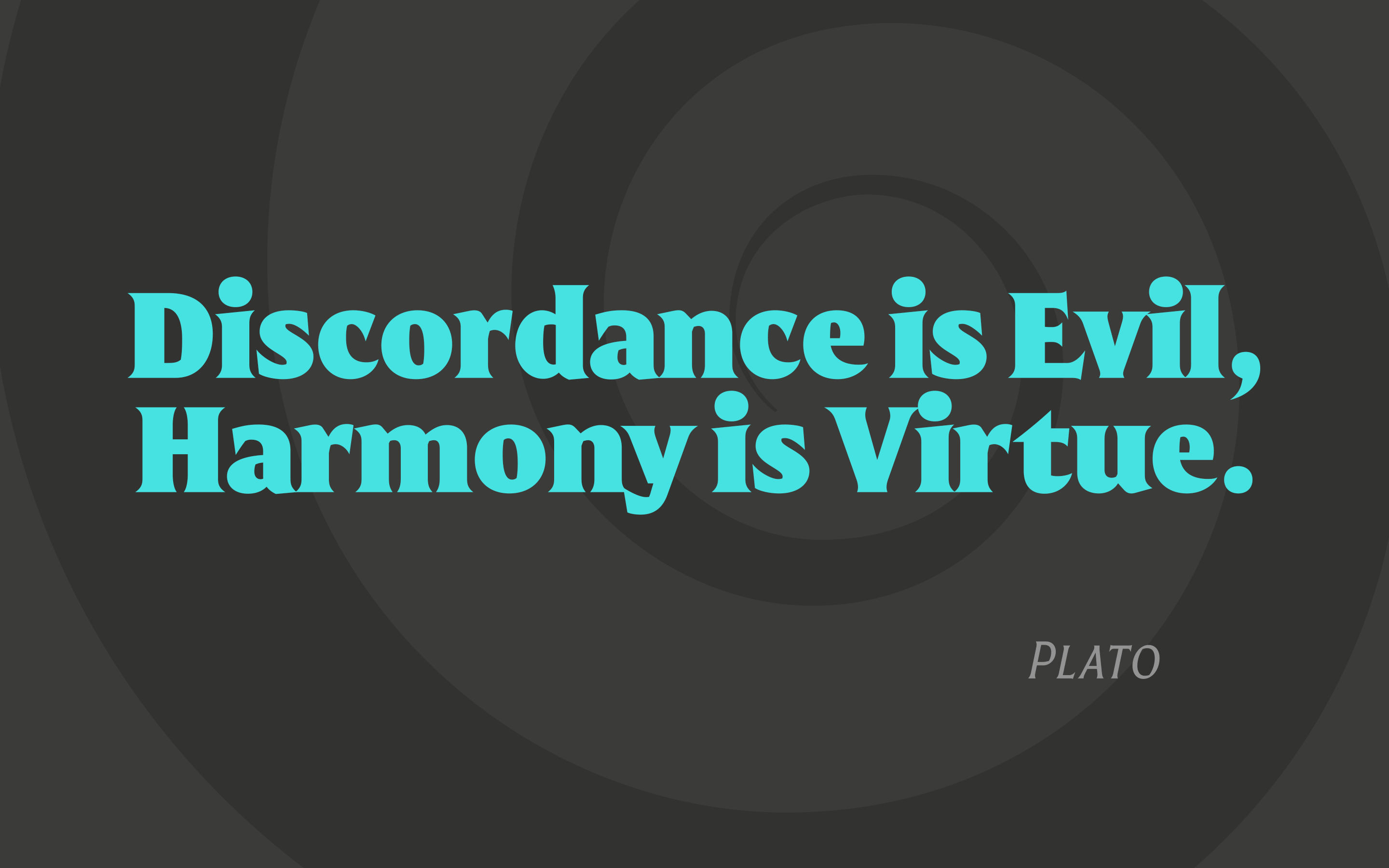
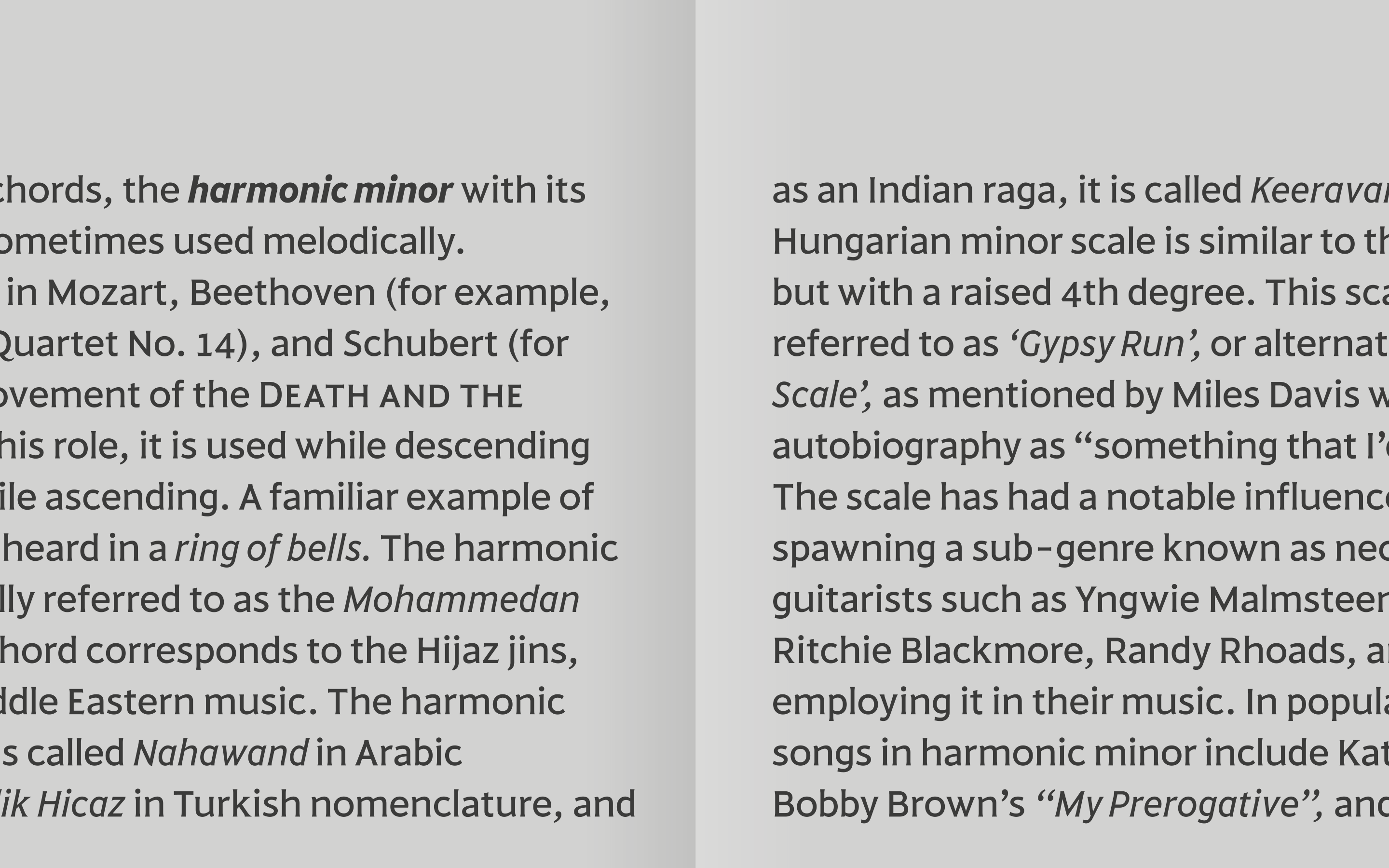
Harmonique is an incised serif typeface designed for both text and display purposes. It’s a type family of two styles that work in harmony together to add distinction and personality to your own typographic compositions. Harmonique’s low contrast forms have the appeal of a humanist sans serif typeface. Its subtly flared terminals evoke the craft and skill of a signwriter’s steady hand, creating an authentic and pleasing aesthetic. Harmonique Display is more calligraphic in its structure – as if drawn by a wide-nibbed pen. This style is accentuated by aggressively barbed serifs and chiselled arcs in its counters and bowls. These strong characteristics help to define a flamboyant, confident style that will provide impact and flair to your headlines, titles and identity designs.
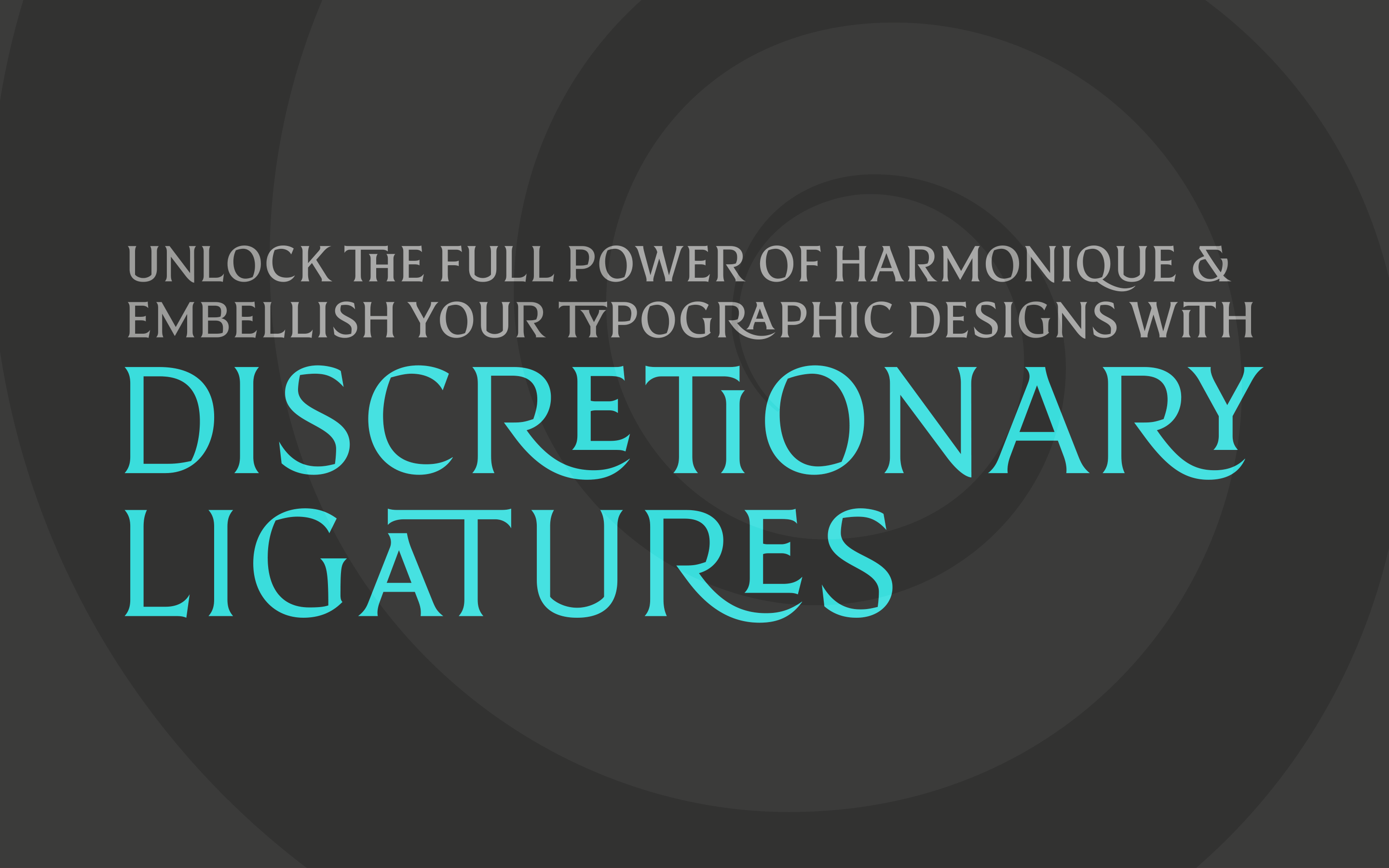
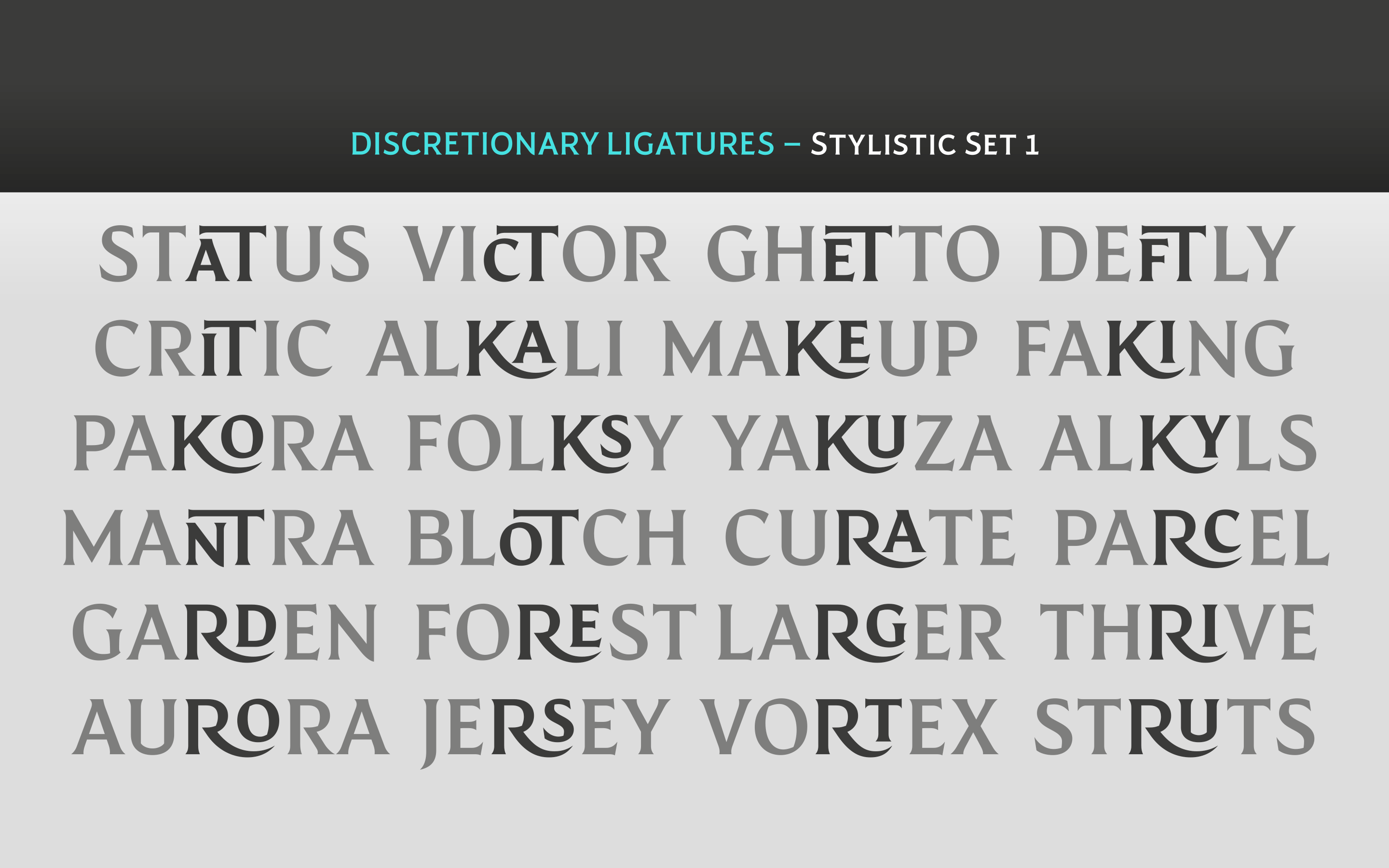
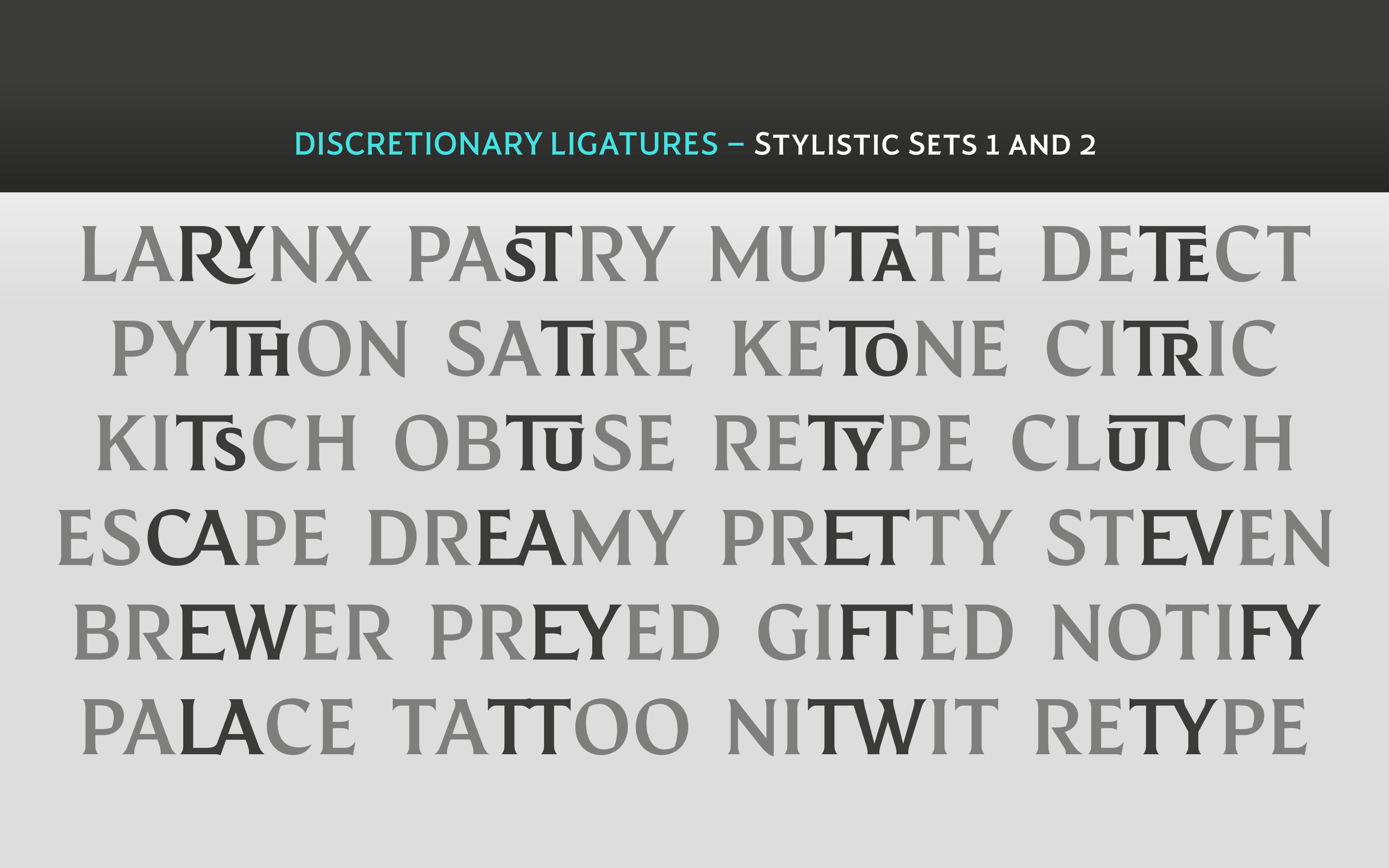
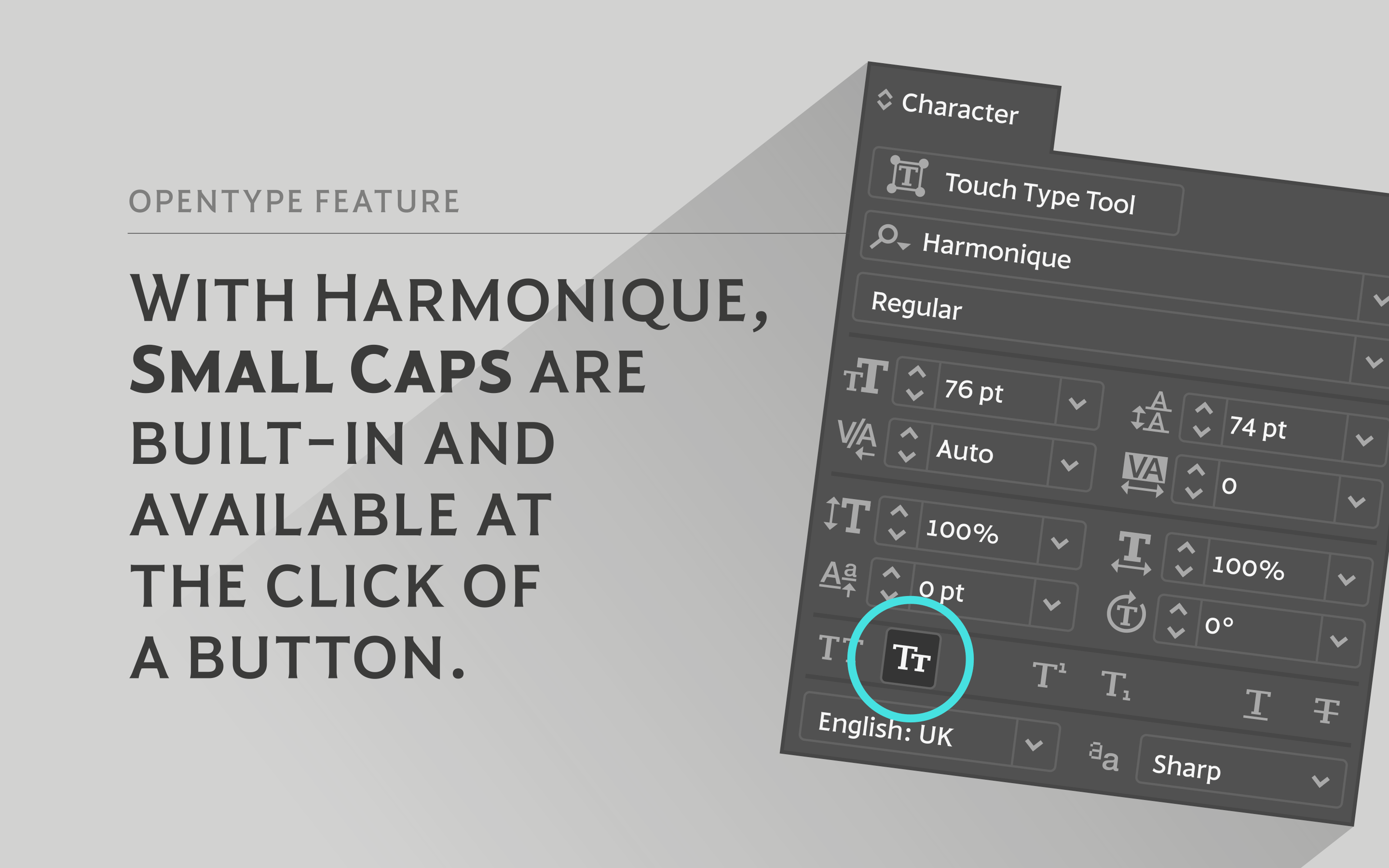
Practical features include 48 ligatures that will enhance titling possibilities with their all-capital pairings – these are accesssed by turning on Discretionary Ligatures and then selecting either Sylistic Set 1 or 2. There are also a number of alternate caps that will subtly enhance your titles and headlines – access these via Stylistc Sets 3 and 4. Small Caps are included too (along with their matching diacritics) – adding another layer of versatility to this typeface. Proportional Lining figures are available as an option if you prefer them to the default Old Style figures.
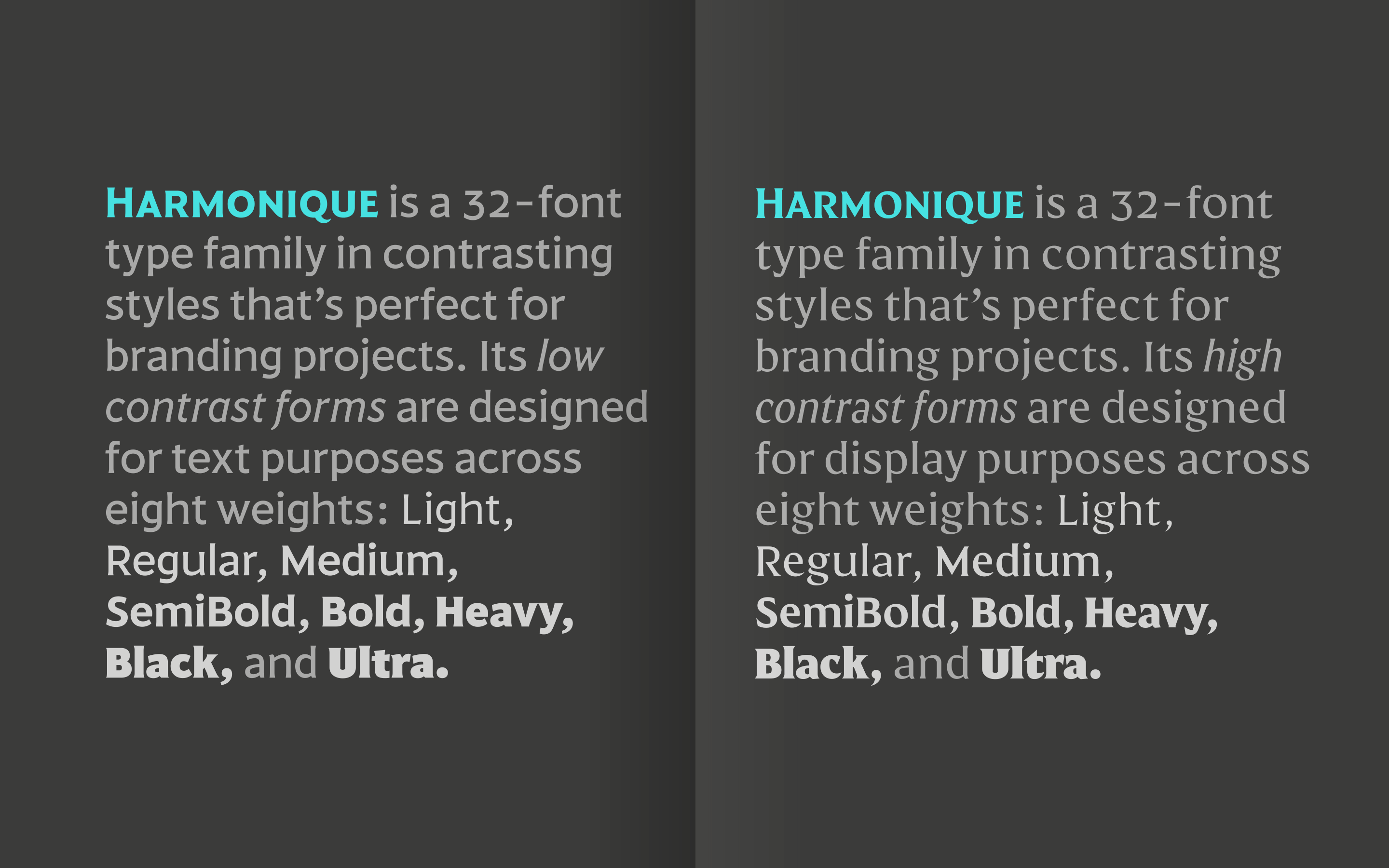
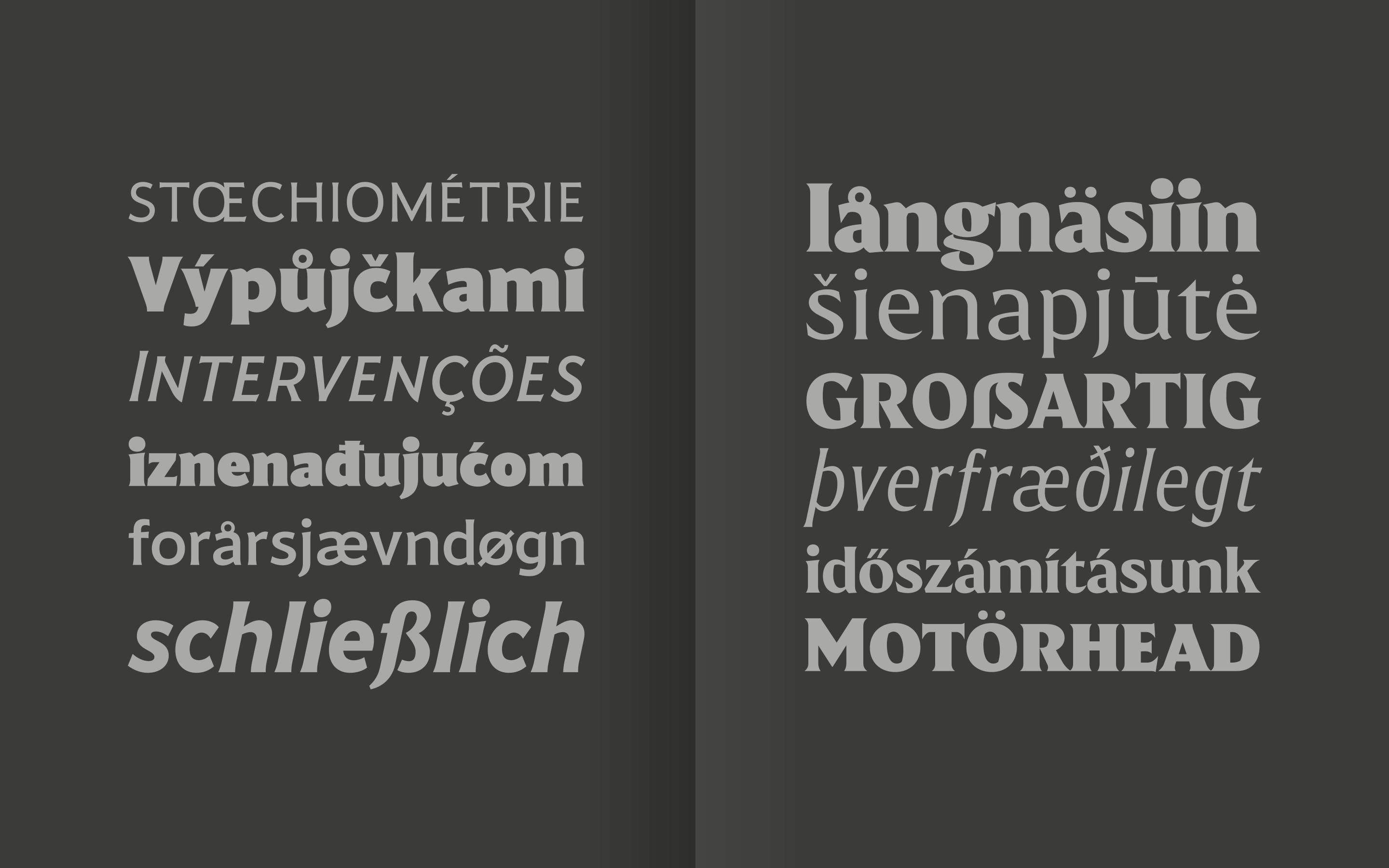
There are 32 fonts altogether, with 8 weights in roman and italic from Light to Ultra in both text (low contrast) and display (high contrast) styles. Harmonique has an extensive character set (650+ glyphs) that covers every Latin European language.
SUGGESTED FONT PAIRING: Harmonique and Stasis.
| Release Date | April 2021 |
| Classification | Incised Serif |
| No. of Fonts | 32 |
| Weights & Styles |
|
| Alternates | 11 |
| Ligatures | 48 |
| Small Caps | Yes |
| No. of Glyphs | 650+ |
| Language Support | European – Latin Only |
The character of Cassandra in "Dreamgirls" serves as a poignant reminder of the complex interplay between power, control, and economic dependency. Through her story, the musical sheds light on the darker aspects of human relationships, where financial control can lead to a form of servitude or "money slavery." This analysis underscores the importance of examining and critiquing the societal structures that allow such dynamics to emerge and persist, highlighting the need for greater awareness and change.
The dynamic between Curtis and Cassandra illustrates a classic example of a power imbalance. Curtis wields significant control over the group's finances, decisions, and overall direction. This control extends into his personal relationships, where he uses financial dependency as a tool for manipulation. Cassandra, in her role and personal life, exemplifies the vulnerabilities that come with economic dependency. Her situation can be metaphorically linked to the concept of a "money slave," where an individual's financial situation renders them subservient to another, often blurring the lines between consent and coercion. The character of Cassandra in "Dreamgirls" serves as
The musical "Dreamgirls," originally conceived by Tom Eyen and Henry Krieger, has been a staple of American musical theater since its premiere in 1981. The story revolves around the rise and fall of a fictional R&B girl group, The Dreams, mirroring the real-life story of The Supremes. Among the complex characters is Cassandra, a pivotal figure whose relationship with the group's manager, Curtis Taylor Jr., embodies themes of economic dependency and power dynamics. This paper aims to explore these themes through the lens of Cassandra's character, touching on the broader implications of such relationships, including the concept of a "money slave." Curtis wields significant control over the group's finances,
The term "money slave" refers to a situation where an individual is financially dependent on another, often to the point of feeling trapped or coerced into staying in a relationship or situation they might otherwise seek to escape. This concept, while controversial and complex, highlights the interplay between financial control and personal autonomy. In the context of "Dreamgirls" and Cassandra's character, this dynamic serves to critique the broader societal issues of economic inequality and the ways in which financial power can be used to control and manipulate others. Her situation can be metaphorically linked to the
Cassandra, often seen as the voice of reason and the moral compass of "Dreamgirls," maintains a tumultuous relationship with Curtis Taylor Jr., the de facto leader of The Dreams. Curtis's manipulation and control over the group, particularly over Deena Jones, the lead singer, and his romantic relationship with Effie White, another key member, are contrasted with his transactional and controlling behavior towards Cassandra. Despite her clear affection and loyalty to Curtis, Cassandra's role evolves to highlight the power imbalance and economic dependency that can characterize such relationships.
An Exploration of Power Dynamics and Economic Dependency in "Dreamgirls": A Critical Analysis of Cassandra's Character