
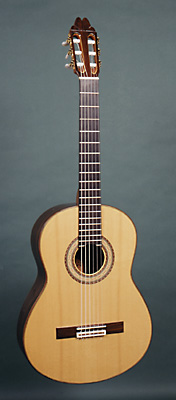
Welcome to the fantastic world of classical guitar. In this site, you will find classical guitar pieces, in midi format, for one and more guitars: actually 5641 MIDI files from 96 composers. Information on how to create midi files and a tutorial on the tablature notation system is presented. Images of ancient guitars provided.
|
|
The room hums with the soft geometry of obsession. Paper planes fold into the angles of impossible equations, coffee rings map orbits, and the owl sits patient as Euclid, a curator of refusal. Outside, streetlamps attempt to divide the dark into tidy parcels; inside, the light bends around the uncut prime and leaves a halo of stubborn shadow.
Ullu fixed on the windowsill — a small, barn-owl stare that takes in the room as if counting the shadows. Not the silly bird of fables but a ledger of long nights; eyes like two clocks, each tick a theorem, each blink a proof. It watches prime things: numbers that will not be factored, choices that will not be split.
Prime things resist the comfortable arithmetic of belonging. They divide or don’t; they yield only under exacting hands. So the uncut prime learns to glitter inward, a secret constellation of potential. Those who seek to fracture it discover instead a depth that refuses simple extraction: you cannot reduce meaning without losing it.
They called it uncut: a stone still raw in the miner’s palm, a numerical heart that refused the jeweler’s hands—prime, alone, its edges unrounded by compromise. You could stare into it and feel the quiet centrifugal pull of something absolute.
Keep it uncut, the quiet implores. Keep the prime whole until you learn its name. Fix your gaze long enough to see the seams that do not yield. Be patient with the refusal: greatness often arrives as resistance, a thing that will not be claimed until you change. And when, finally, you touch that raw surface, you will feel not victory but recognition— the astonished kinship of two things that have endured the same long, exacting night.
The owl blinks once, twice—the slow punctuation of a sentence unfinished. In the hush you can hear the soft arithmetic of breath and thought: one plus one plus one—an accumulation of insistence. Around the uncut prime, a small orbit of people press closer: a skeptic, a believer, a child with ink on their fingers— all drawn to the fixed light as moths to something sharper than flame.
There is a language to keeping things whole. It begins with refusal— the refusal to shave corners for comfort, to grind brilliance into polish. It asks for endurance: late hours punctuated by the scratch of a pen, by pages turned not for answers but to keep the habit of seeking. The owl’s beak tap-taps like a metronome on the table: steady, insistently precise.
Composers are grouped in 6 pages: A-B;
C-F;
G-L;
M-O;
P-R; S-Z .
J.-S.
Bach , A.
Barrios Mangore , N. Coste
, M. Giuliani , F.
Sor and F.
Tarrega are on their own page
Click here
to listen to 20 great MIDI from the site
Composers in alphabetical order
The room hums with the soft geometry of obsession. Paper planes fold into the angles of impossible equations, coffee rings map orbits, and the owl sits patient as Euclid, a curator of refusal. Outside, streetlamps attempt to divide the dark into tidy parcels; inside, the light bends around the uncut prime and leaves a halo of stubborn shadow.
Ullu fixed on the windowsill — a small, barn-owl stare that takes in the room as if counting the shadows. Not the silly bird of fables but a ledger of long nights; eyes like two clocks, each tick a theorem, each blink a proof. It watches prime things: numbers that will not be factored, choices that will not be split. uncut prime ullu fixed
Prime things resist the comfortable arithmetic of belonging. They divide or don’t; they yield only under exacting hands. So the uncut prime learns to glitter inward, a secret constellation of potential. Those who seek to fracture it discover instead a depth that refuses simple extraction: you cannot reduce meaning without losing it. The room hums with the soft geometry of obsession
They called it uncut: a stone still raw in the miner’s palm, a numerical heart that refused the jeweler’s hands—prime, alone, its edges unrounded by compromise. You could stare into it and feel the quiet centrifugal pull of something absolute. Ullu fixed on the windowsill — a small,
Keep it uncut, the quiet implores. Keep the prime whole until you learn its name. Fix your gaze long enough to see the seams that do not yield. Be patient with the refusal: greatness often arrives as resistance, a thing that will not be claimed until you change. And when, finally, you touch that raw surface, you will feel not victory but recognition— the astonished kinship of two things that have endured the same long, exacting night.
The owl blinks once, twice—the slow punctuation of a sentence unfinished. In the hush you can hear the soft arithmetic of breath and thought: one plus one plus one—an accumulation of insistence. Around the uncut prime, a small orbit of people press closer: a skeptic, a believer, a child with ink on their fingers— all drawn to the fixed light as moths to something sharper than flame.
There is a language to keeping things whole. It begins with refusal— the refusal to shave corners for comfort, to grind brilliance into polish. It asks for endurance: late hours punctuated by the scratch of a pen, by pages turned not for answers but to keep the habit of seeking. The owl’s beak tap-taps like a metronome on the table: steady, insistently precise.
Note to MIDI sequence contributors
Your submissions are welcomed.
Please send them by e-mail (end of text). Pieces
should bear the composer's name and be properly identified.(ex.: J.K. Mertz (1806-1856) Nocturne
Op.4 No.2.). The submissions
should bear information on the transcriber or arranger when available. The submitter's name
will appear beside the accepted submission.
This site exists primarily to showcase pieces written for the classical
guitar. Established and recognized transcriptions and arrangements (e.g.,
Tarrega, Segovia,..) of pieces written by non-guitar composers will also be given
high priority.
New compositions for the classical guitar are also welcomed. New
compositions that meet quality guidelines will be added to the site. For
new contributors, it would be appreciated if you would also submit several
pieces by known composers in addition to your own compositions. This will
help to expand the repertoire of established works for the classical guitar in
addition to expanding the repertoire of new music.
Last update: March 8 2026
Copyright François Faucher 1998-2025
 G.F.Handel's Sonata 2. Allegro
3.Adagio HWV368
G.F.Handel's Sonata 2. Allegro
3.Adagio HWV368