1. Standard Oriya Keyboard Layout
High resolution image suitable for printing.
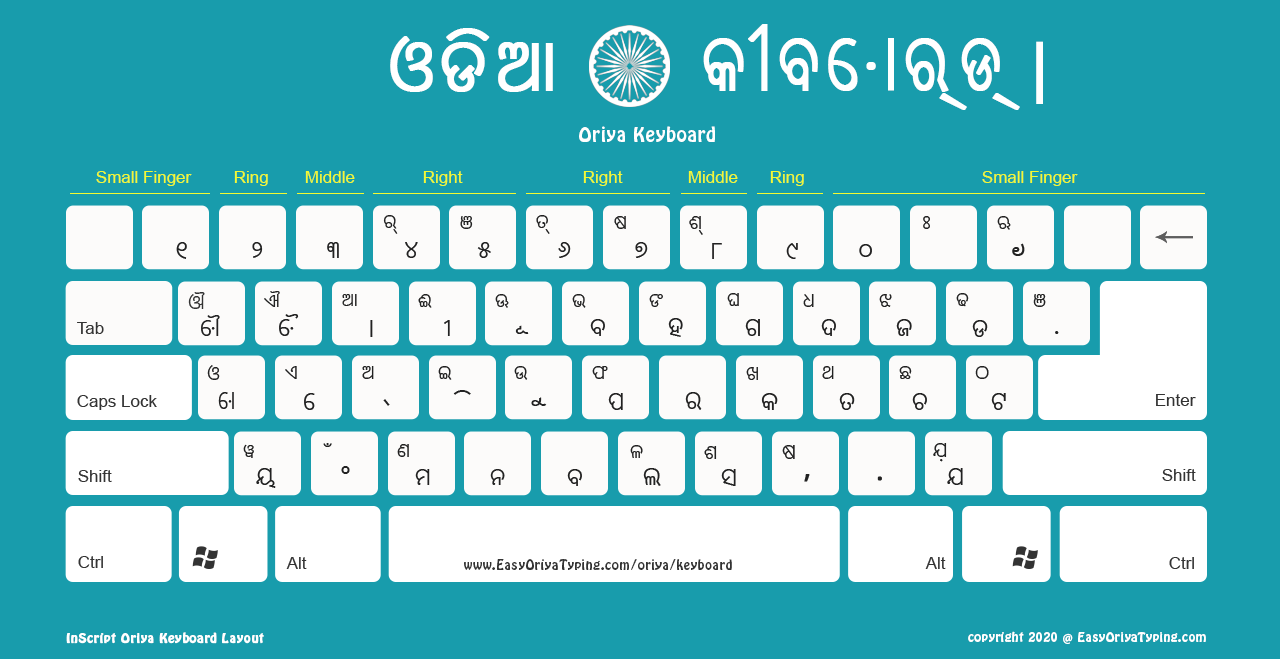
We have five different Oriya keyboard layouts for you to download on your computer. Once downloaded — you can use it as a reference to type in Oriya either on Word document or any other text editor. You also need to download the matching Oriya fonts.
High resolution image suitable for printing.
High resolution image suitable for printing.
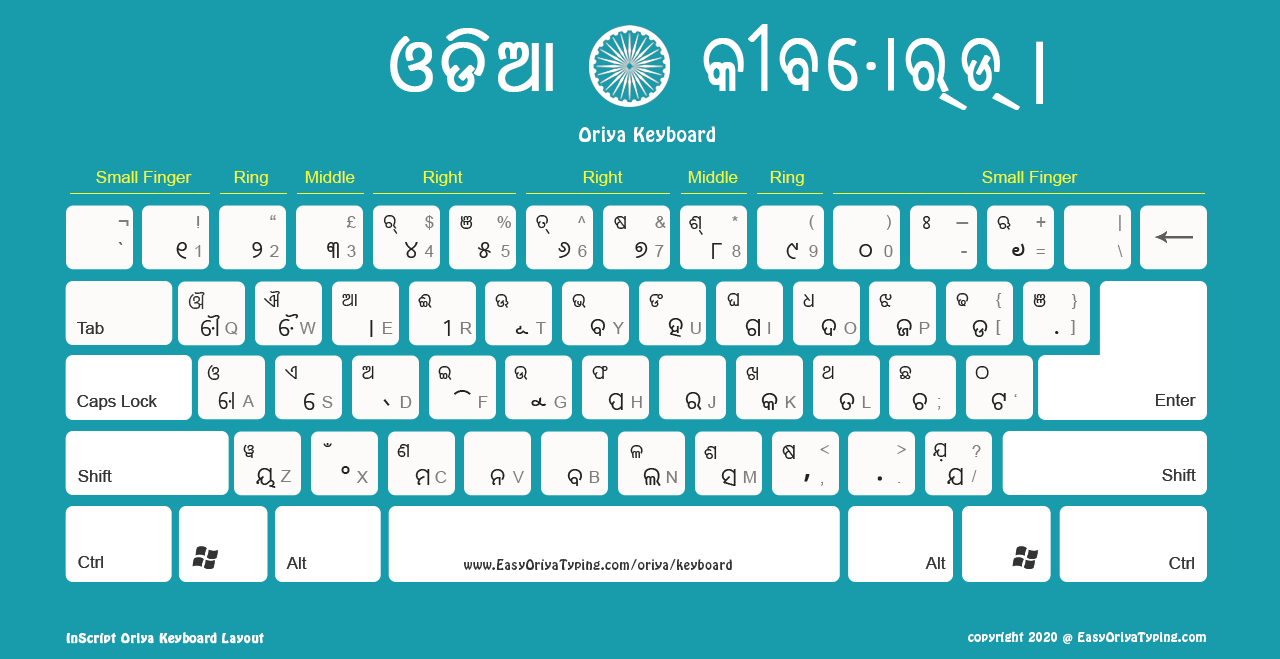
High resolution image suitable for printing.
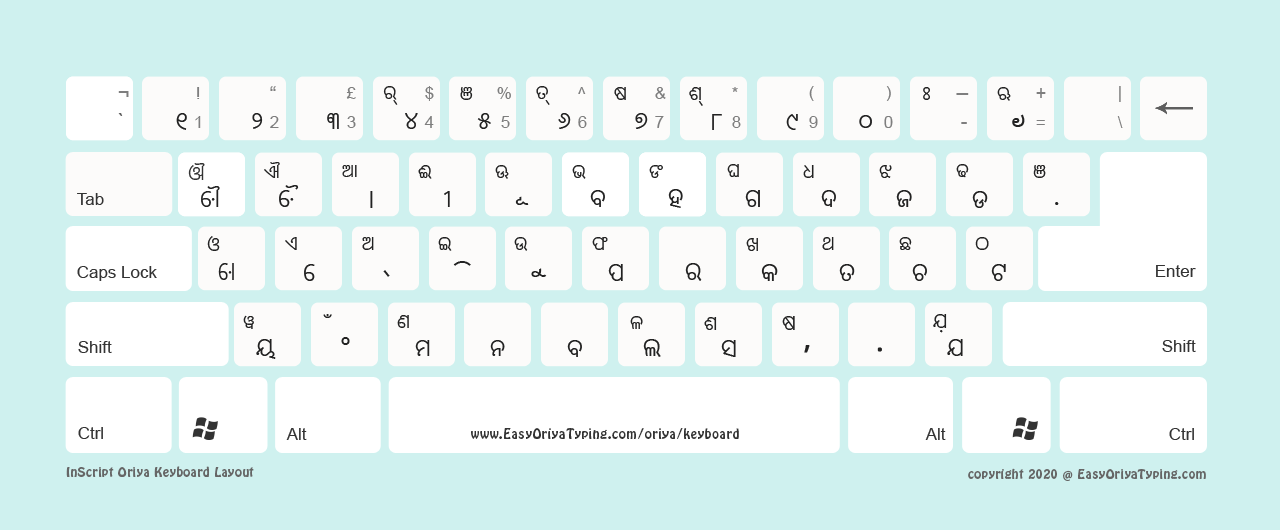
High resolution image suitable for printing.
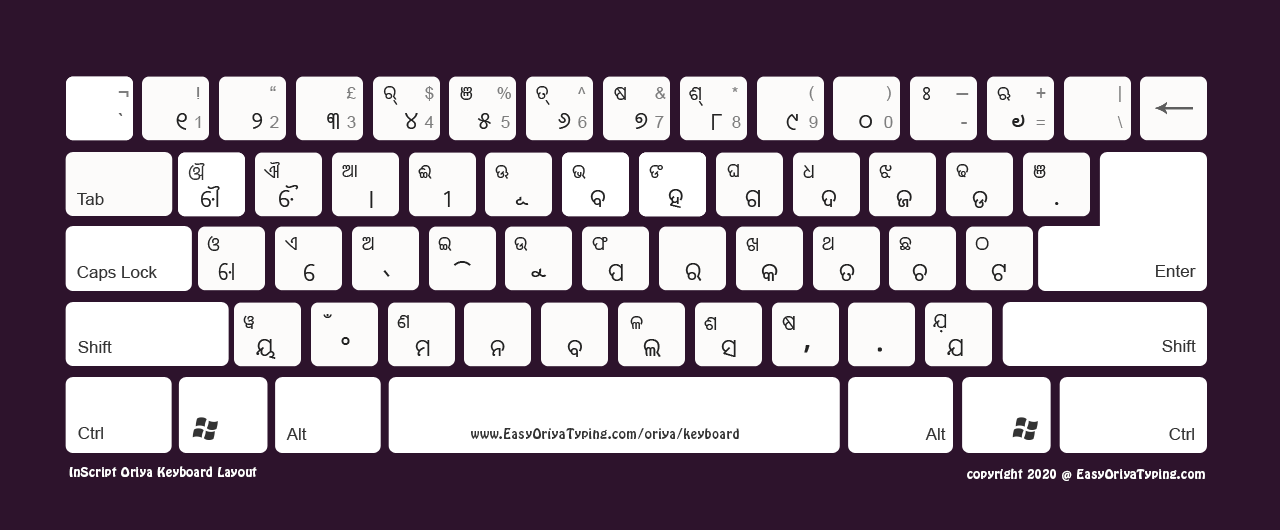
High resolution image suitable for printing.
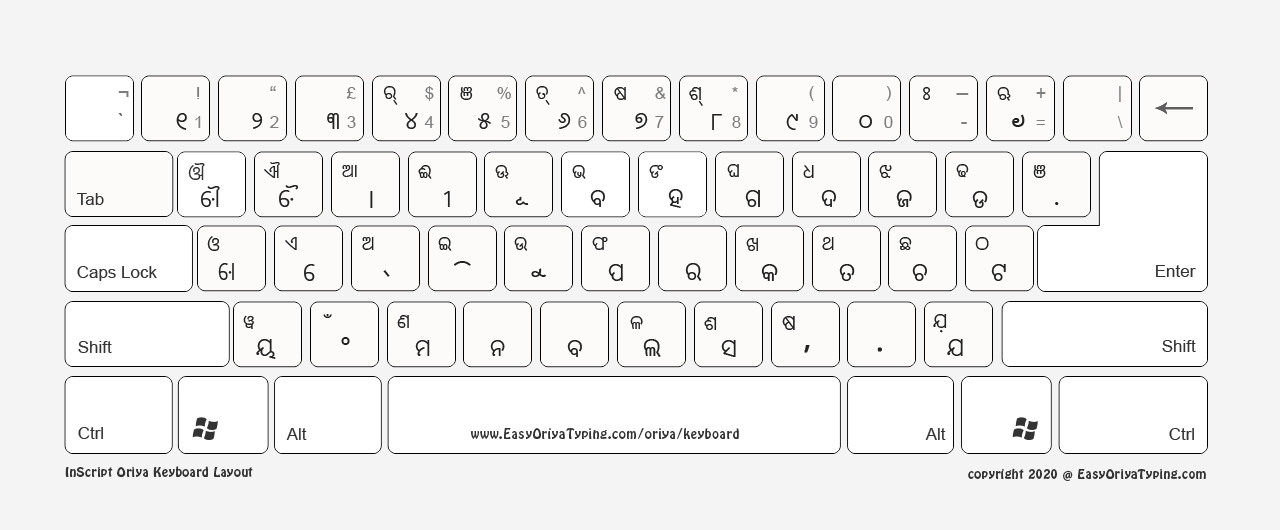
Getting started with Oriya typing is simple! Follow our step-by-step process.
Install Odia font — head over to our extensive fonts repository and install your preferred typeface.
Download your ideal keyboard image through this simple downloading process:
Browse and click on your preferred keyboard style
Right-click anywhere on the enlarged image
Choose "Save image as..." and pick your storage location
Prepare your writing space by launching your go-to text application and activating the Oriya font you installed in step one.
Begin your Oriya writing journey! Display your keyboard reference image alongside your text editor for seamless typing guidance.
Space-saving tip: Working on a compact setup? Our high-resolution keyboards deliver stunning print quality — create a physical reference that's always within reach!
Ensures traditional accuracy — each layout preserves authentic Oriya script conventions and cultural writing traditions.
Offers complete flexibility — choose from multiple styles and backgrounds to match your personal or professional preferences.
Includes unrestricted usage rights — download, print, share, and modify for any purpose without limitations or hidden costs.
Broom, D. M. (2007). Welfare and behavioral needs of animals. Journal of Applied Animal Welfare Science, 10(3), 243-254.
Lindsay, S. (2009). Canine Behavioral Medicine. Wiley-Blackwell.
Studies on animal behavior have significantly advanced our understanding of animal cognition, social behavior, and communication. For example, research on animal emotions has shown that animals experience a range of emotions, including joy, fear, and empathy, which are similar to those experienced by humans (Bekoff, 2002). Additionally, investigations into animal social behavior have revealed the complexity of social structures and relationships within and between species (de Waal, 2016).
The study of animal behavior and veterinary science is a vital aspect of understanding the complex interactions between animals and their environment. As a multidisciplinary field, it combines insights from biology, psychology, and veterinary medicine to promote animal welfare and improve human-animal relationships. This review aims to provide an overview of the current state of research in animal behavior and veterinary science, highlighting key findings, applications, and future directions.
de Waal, F. B. M. (2016). The Age of Empathy: The Lessons of a New World from an Old Planet. Harmony Books.
Wemelsfelder, C. (2005). Animal boredom and enrichment. Journal of Applied Animal Welfare Science, 8(3), 257-269.
Bekoff, M. (2002). Animal Emotions: Exploring Passionate Natures. New York: HarperCollins.
The study of animal behavior and veterinary science is a dynamic and rapidly evolving field, with significant implications for animal welfare, conservation, and human-animal relationships. This review highlights the importance of continued research and collaboration in this field, with a focus on interdisciplinary approaches, translational research, and emerging technologies. By advancing our understanding of animal behavior and welfare, we can promote more effective conservation strategies, improve animal care practices, and foster stronger human-animal bonds.
 Sambhu Raj Singh ·